



Social Feeds and Risk Appetites: Why Crypto’s Confidence Gap is Driven by Hype and Gender

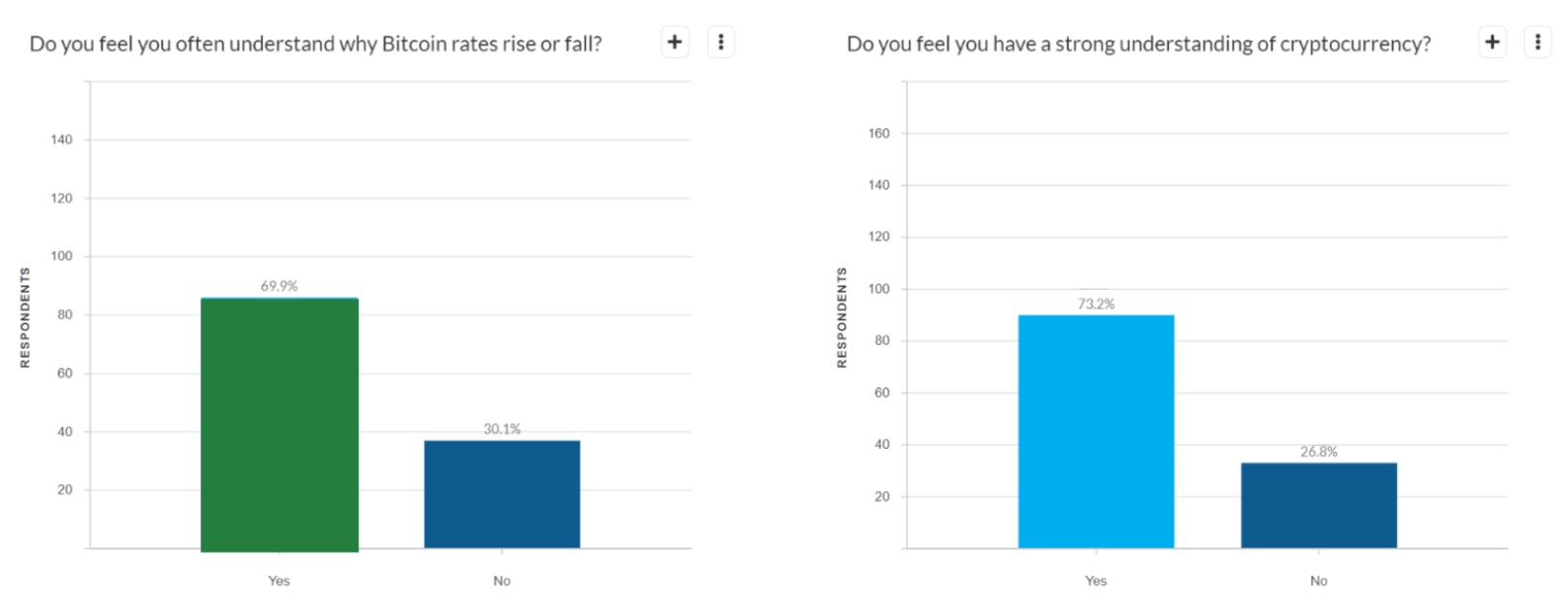
Talk of Bitcoin is seemingly everywhere these days and Americans are investing in record numbers. Is your business ready for the coming economic cycle? provides the market research operations perspective on navigating economic volatility, showing how quota-based pricing and automation give research teams budget flexibility when client spend contracts during uncertain markets. But is Bitcoin a fleeting trend that Elon Musk tweets about or do people actually feel confident in their understanding of cryptocurrency? Surprisingly, Almost three-quarters of investors surveyed say their understanding is strong. PureSpectrum x Sentient: generational insights webinar measured that kind of declared confidence against implicit emotional responses, finding that generational differences in how people feel about money and the economy often diverge from what they self-report. And while it’s difficult to actually prove this fact, almost the same amount of respondents claimed to understand why Bitcoin rates rise and fall.
So where are investors getting their confidence? A third of the Bitcoin investors reported using Reddit and Twitter for financial updates and advice. Current social media usage trends covers how Americans interact with those same platforms more broadly, showing how platform trust, content type, and age shape what people believe and act on when they encounter financial or product information on social media. But more frequently they are relying on finance news (54%), advice from investment apps (40%), and family and friends (39%) to follow the market. And it seems that this varied research approach is paying off. 80% of Americans polled reported seeing some profit from Bitcoin investments.
Source: PureSpectrum Insights Platform
Bitcoin is often touted as a financial equalizer but our study showed that men are making more money in crypto than women. Only 3% of women have made over a 50% return on their Bitcoin investment vs. 13% of men. However, none of the women polled reported losing money in Bitcoin, vs 11% of men, signaling that men may have a higher risk appetite but it doesn’t always pay off.
Overall, it seems that Americans remain “Bitcurious” but are not totally sold on the idea that Bitcoin isn’t just a financial fad. A third of respondents are only planning on a 1-5 year investment, while 18% haven’t formulated any type of long-term Bitcoin strategy. Of the 20% who felt that they will always invest in cryptocurrencies, significantly more males than females plan to invest in them for the rest of their lives. So while many current Bitcoin investors may feel that they understand their investment, it may only be risk-tolerant men who are ready to commit long-term.
Want to learn more about running your own survey? See how easy it is on our Insights Platform.
Interested in getting access to this data? Email us at marketing@purespectrum.com
Methodology
PureSpectrum interviewed 691 online respondents on June 12, 2021. The study targeted consumers within the United States and consisted of a general population audience of 18+ years old. This study uses 95% confidence level to examine the data.