
High stakes require human judgment, while low-stakes tasks can run on fast automation. Here is how PureSpectrum applies its reversibility and risk framework to build safe, effective AI workflows.
In a recent blog we outlined the core principle governing our internal AI deployment: is the action easily undone, and are the stakes low? If an action meets both criteria, it can be evaluated for full automation. If it fails either condition, a human must remain explicitly in the loop.
Reversibility plus risk carries us through almost every operational decision we face. Rather than repeating that full argument here, I want to show what this framework actually looks like applied to two live workflows inside PureSpectrum. If you want the general, portable version of the test, read the Greenbook piece first. This post picks up where that one leaves off.
Example 1: High Stakes, Low Reversibility
Our internal project specification agent supports the project kickoff process. It accesses our CRM tools, email, Slack, and Google Drive, reads through all the relevant documentation, fills out the project specification and produces an output. That data aggregation alone saves hours every cycle.
Here is the part that matters: the agent produces the output, but it does not decide the project is ready for the field. Because this review involves reviewing cost and sample information, a person still reviews what it found before anything is signed off. The entire point of a project specification is to get the setup correct. The judgment and accountability must sit with a person, not a system. Getting this one wrong isn’t easily undone, so a human stays in the loop before anything becomes official.
Example 2: Low Stakes, High Reversibility
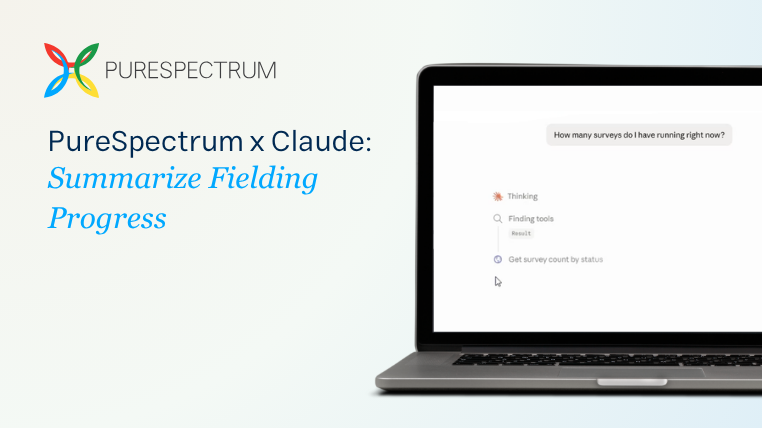
Compare that to a workflow where we are comfortable letting the system move with much less friction. Our services team runs thousands of projects concurrently. Instead of a team leader checking each study manually, they can ask directly for updates across the organization and get flagged on the specific studies that are falling behind schedule.
Here, the cost of being wrong is relatively small. If a project gets flagged that turns out to be on track, the team leader sees that and moves on. If a study genuinely needs attention, it gets caught faster than manual review would allow. Because the action is low-stakes and reversible, we don’t require the same level of human confirmation as the audit agent does. The system surfaces what needs attention out of the many; the human executes the judgment.
The Whole Philosophy, in Miniature
The contrast between those two examples is really our entire approach compressed into two workflows. The higher the cost of being wrong, and the harder an action is to undo, the more a person needs to be in the loop before anything happens. The lower those two things are, the more we let the system move on its own.
We didn’t arrive at that as an abstract principle first and then go looking for examples to fit it. We arrived at it by looking at what we had actually built and asking, honestly, where we would want a person standing between the system and the outcome if something went wrong.
The exact same rules carried over when we built our Claude Connector for the PureSpectrum Marketplace: clients start conservatively and expand permissions as comfort grows, but consequential actions, like closing a project or changing a CPI, always require explicit human sign-off, no matter how comfortable anyone becomes with the tool.
Governance built this way isn’t a brake on adoption. It is what lets people move quickly without flinching, because everyone already knows where the walls are.
This is the third post in an ongoing series on how PureSpectrum has approached AI adoption. Read the first post on our three-phase rollout framework: Explore, Scale, Efficiency, and the second on how adoption is harder than the build.

Todd Myers
Chief Operating Officer